
The Logic Exhibit System is a modular display infrastructure for museums, galleries, cultural institutions, and travelling exhibitions. It was designed around one principle: the greatest number of possible display configurations from the fewest possible components. Frames, panels, glass, and connectors combine on a clean 36-inch grid to produce cases, wall runs, room dividers, and mixed case-and-wall installations that can be assembled by two or three people, reconfigured for the next exhibition, and stored flat when not in use.
Below is a snapshot of the standard configurations available. These are starting points. The system is designed to be adapted, extended, and combined in ways that suit your specific space and collection.

Freestanding cases stand on the floor and can be positioned anywhere in a room. They work in retail stores, museum galleries, corporate lobbies, and heritage spaces. Because they sit independently rather than mounting to a wall or built-in structure, they can be repositioned as the layout evolves and viewed from multiple sides where the design calls for it.
-1024x683.webp)
Wall-mounted cases use the vertical surfaces of a room as the primary display plane. They are efficient where floor space is limited and work well in gallery-style presentations where a linear sequence of objects tells a story along a wall. Individual units can be spaced or joined to create a continuous run.
-768x1024.webp)
A pedestal case combines a solid base with a glass enclosure at display height, elevating a single object or a small grouping to eye level in a way that communicates significance. This configuration is used in museum settings for headline objects and in retail for hero product placements where the goal is to make one thing stand out.
A pedestal case combines a solid base with a glass enclosure at display height, elevating a single object or a small grouping to eye level in a way that communicates significance. This configuration is used in museum settings for headline objects and in retail for hero product placements where the goal is to make one thing stand out.
-768x1024.webp)
Tower cases are tall, narrow freestanding cases. Where a standard case uses horizontal shelves to display items side by side, a tower creates a vertical line of objects or a single dramatic presentation that draws the eye upward and is visible from across a room. They work particularly well in retail as focal pieces and in museum galleries for tall artefacts.

Corner cases are built for the right-angle intersections of walls, occupying space that is often wasted in a standard room. They present objects at an angle that is visible from both adjacent directions and work well as visual anchors at the transition points between gallery sections or retail zones.
Not every space calls for a rectangle. Hexagonal and octagonal cases add a geometry that works particularly well as centrepiece installations in open gallery or retail spaces where visitors approach from multiple directions. Both formats are available as floor cases and tabletop vitrines.
Eight panels create a slightly rounder, softer profile. The additional facets reduce the angularity of the form.
Where wood and glass create warmth, metal cases create edge. Aluminium and steel-framed cases suit environments where a contemporary or high-security aesthetic is the goal, or where outdoor and semi-outdoor conditions make wood-based construction inappropriate.
Not every display solution is a standalone case. Custom millwork covers the built-in joinery, cabinetry, and display infrastructure that integrates directly with the architecture of a space: a full wall of display cabinetry that reads as part of the building, a reception desk that incorporates product display, a back-wall shelving system that carries both branding and merchandise.





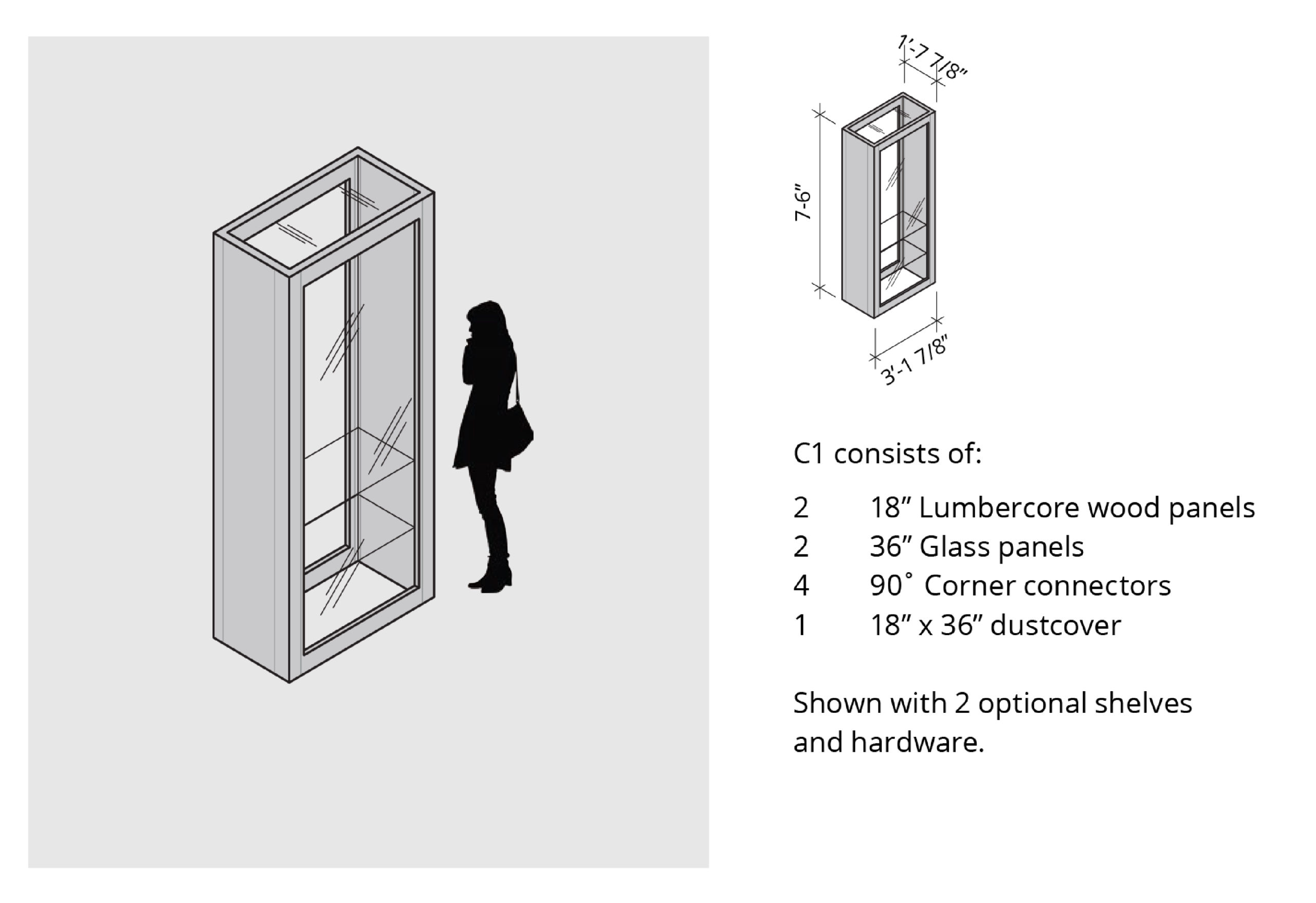
A narrow case built for objects that benefit from a slim, vertical profile. Two 18-inch wood panels and two 36-inch glass panels. Shown with optional glass shelves.
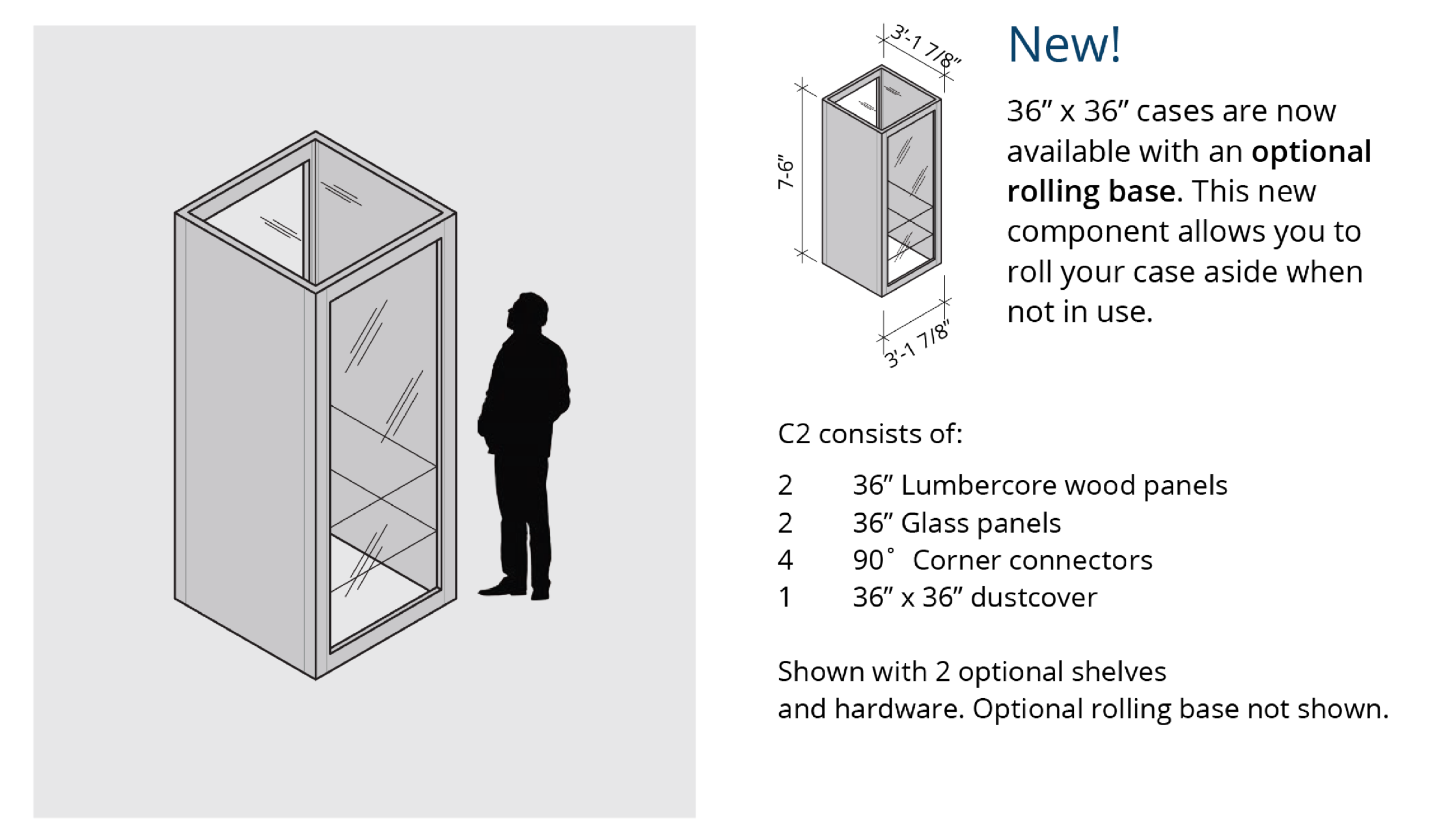
The standard single case. Equal depth and width, the most commonly specified case for three-dimensional objects. Available with an optional rolling base for repositioning without lifting.
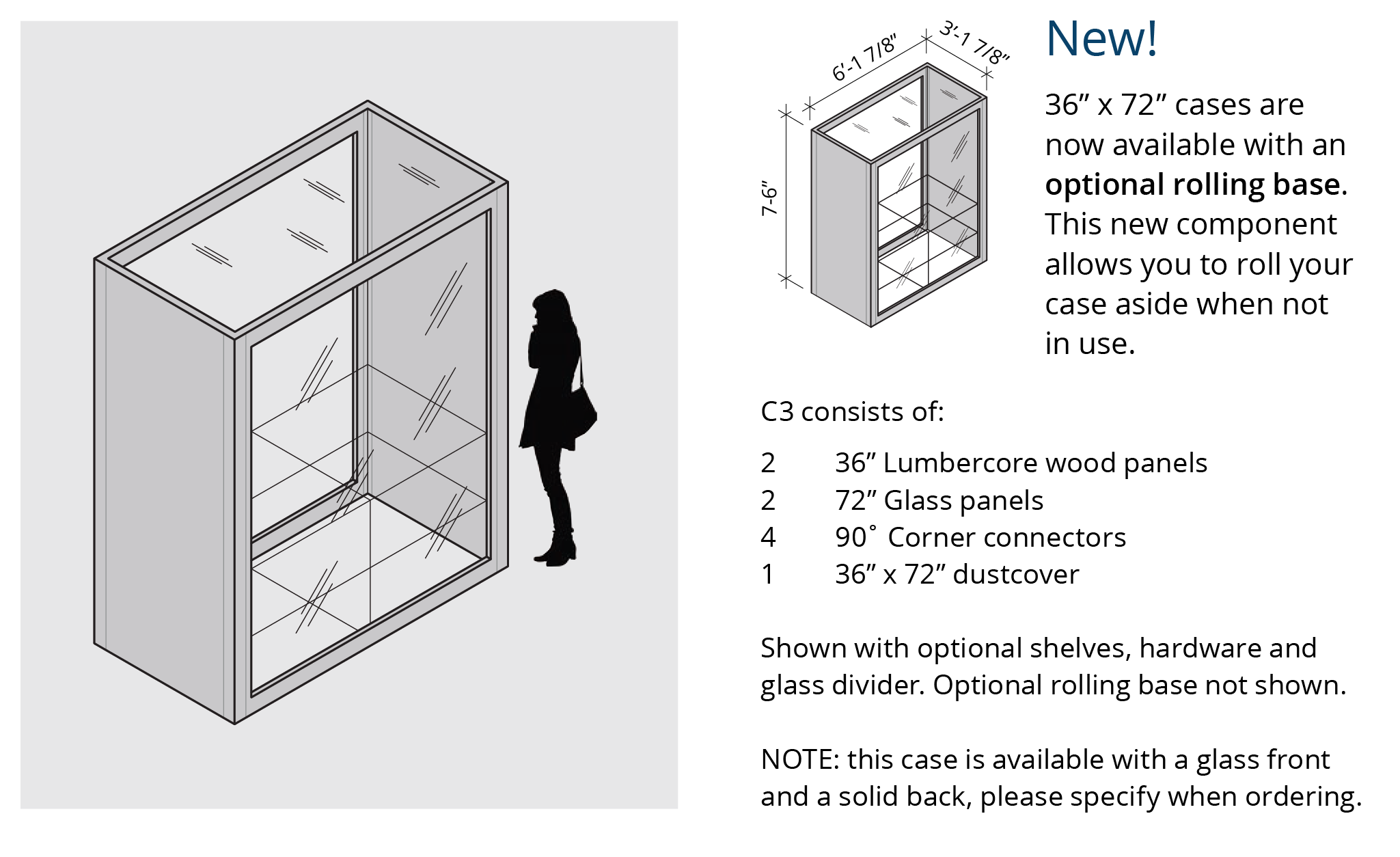
A wide case that accommodates larger objects or multiple objects across a generous display field. Available with static or sliding glass panels. The sliding panel allows access without disassembly.
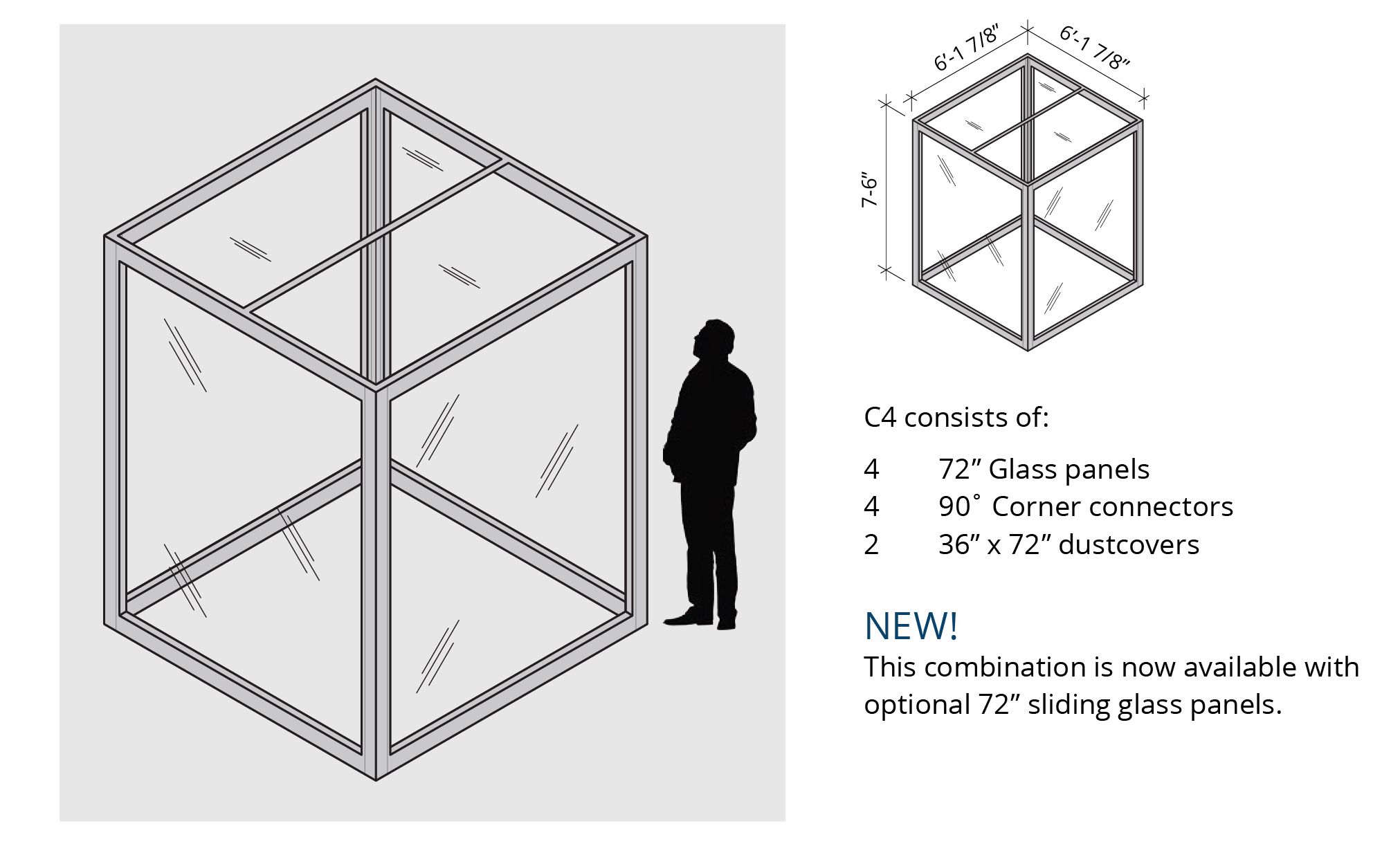
A fully glazed square case with four 72-inch glass panels. Maximum visibility from every direction. Available with optional sliding glass panels.

A wide, shallow case built for objects that benefit from width rather than depth. Two 72-inch glass panels with 18-inch wood end panels.

A compact L-shaped wall run using five 36-inch panels. Effective in smaller gallery spaces or as a self-contained display zone.
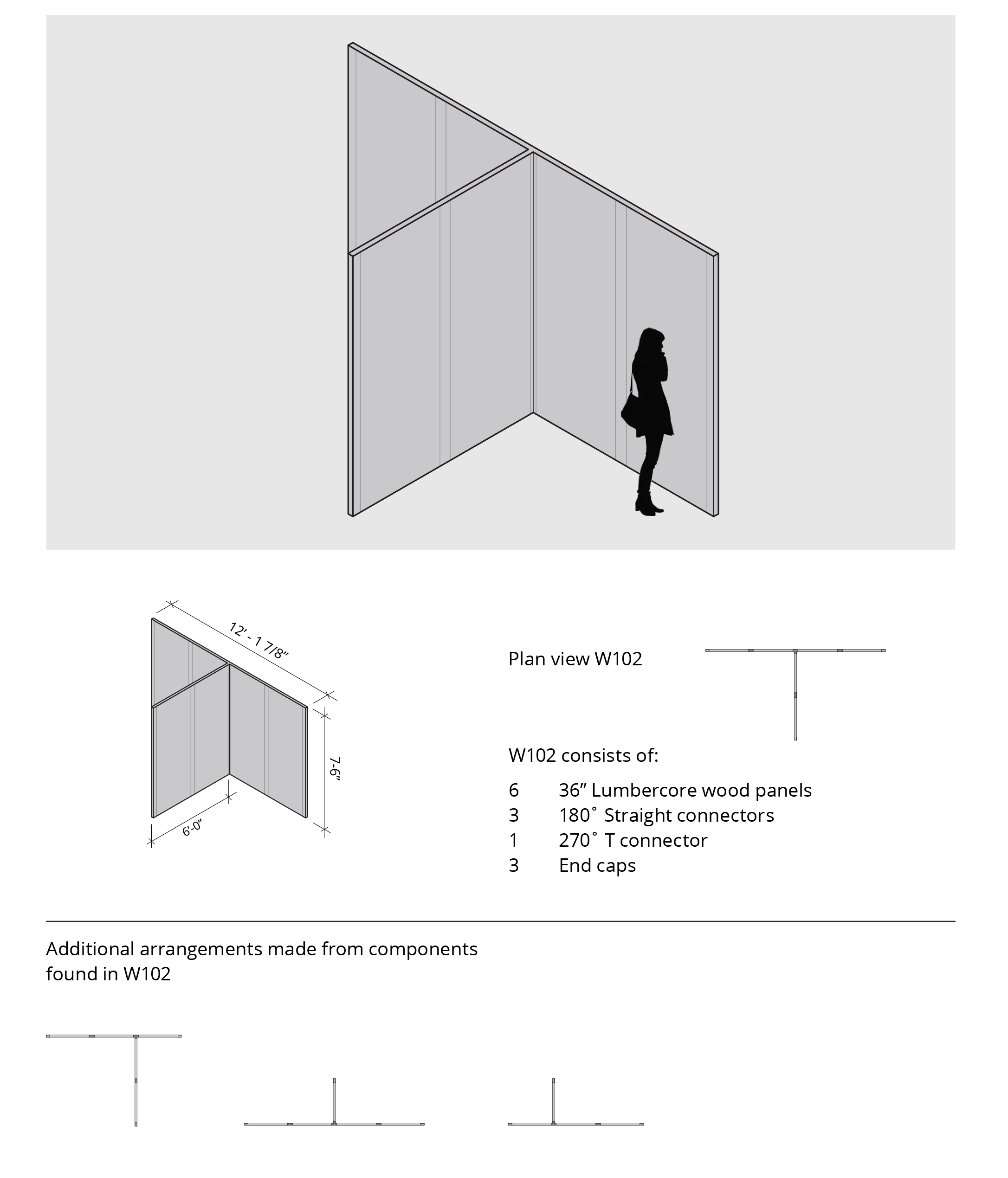
A T-shaped wall configuration. Divides a space into defined zones while providing display surfaces on multiple sides.
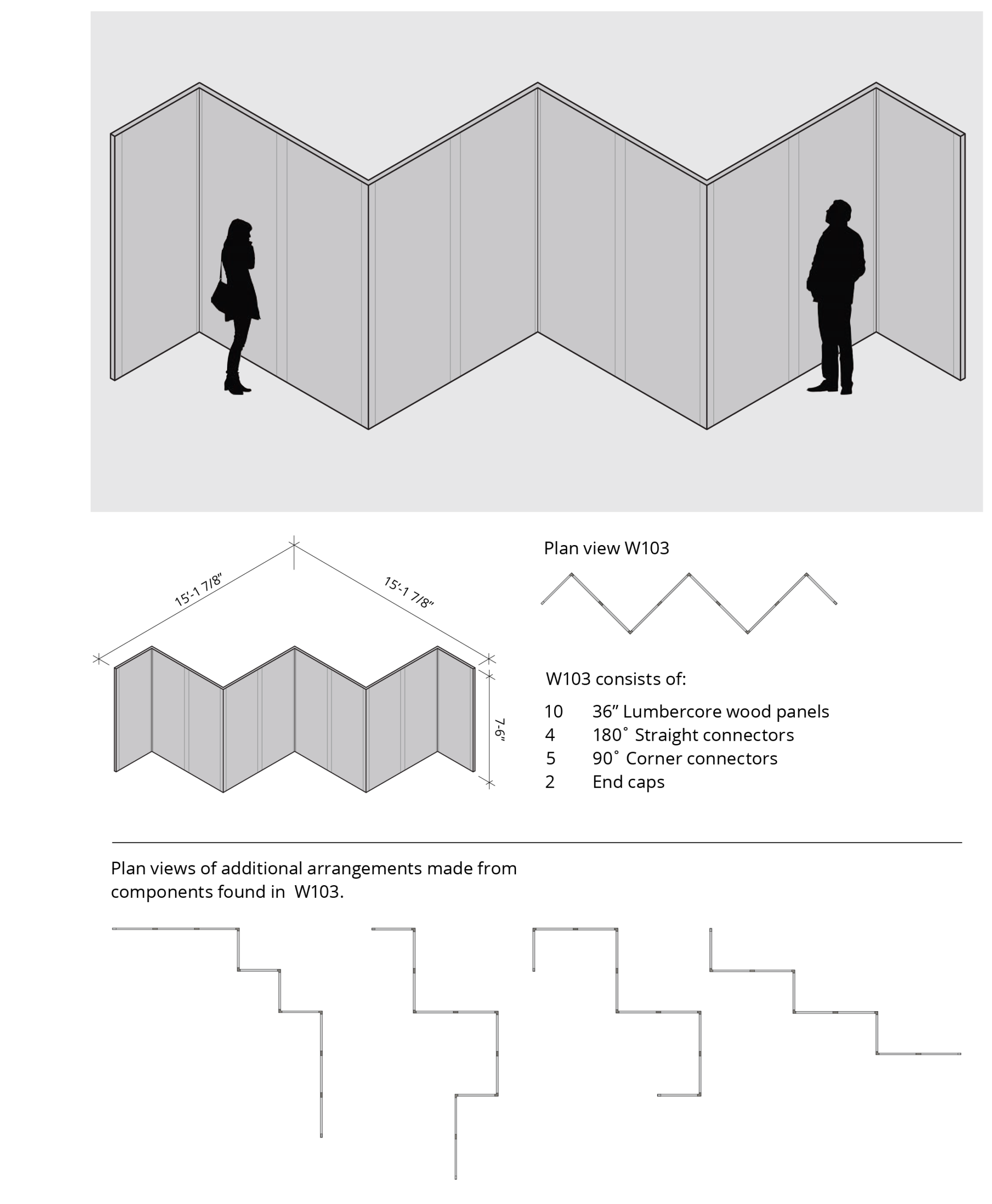
An extended zigzag wall run using ten panels. Creates a large-scale exhibition presence with substantial display area across a flowing, dynamic form.

A long U-shaped wall run. Encloses a display zone on three sides, ideal for immersive exhibition environments.
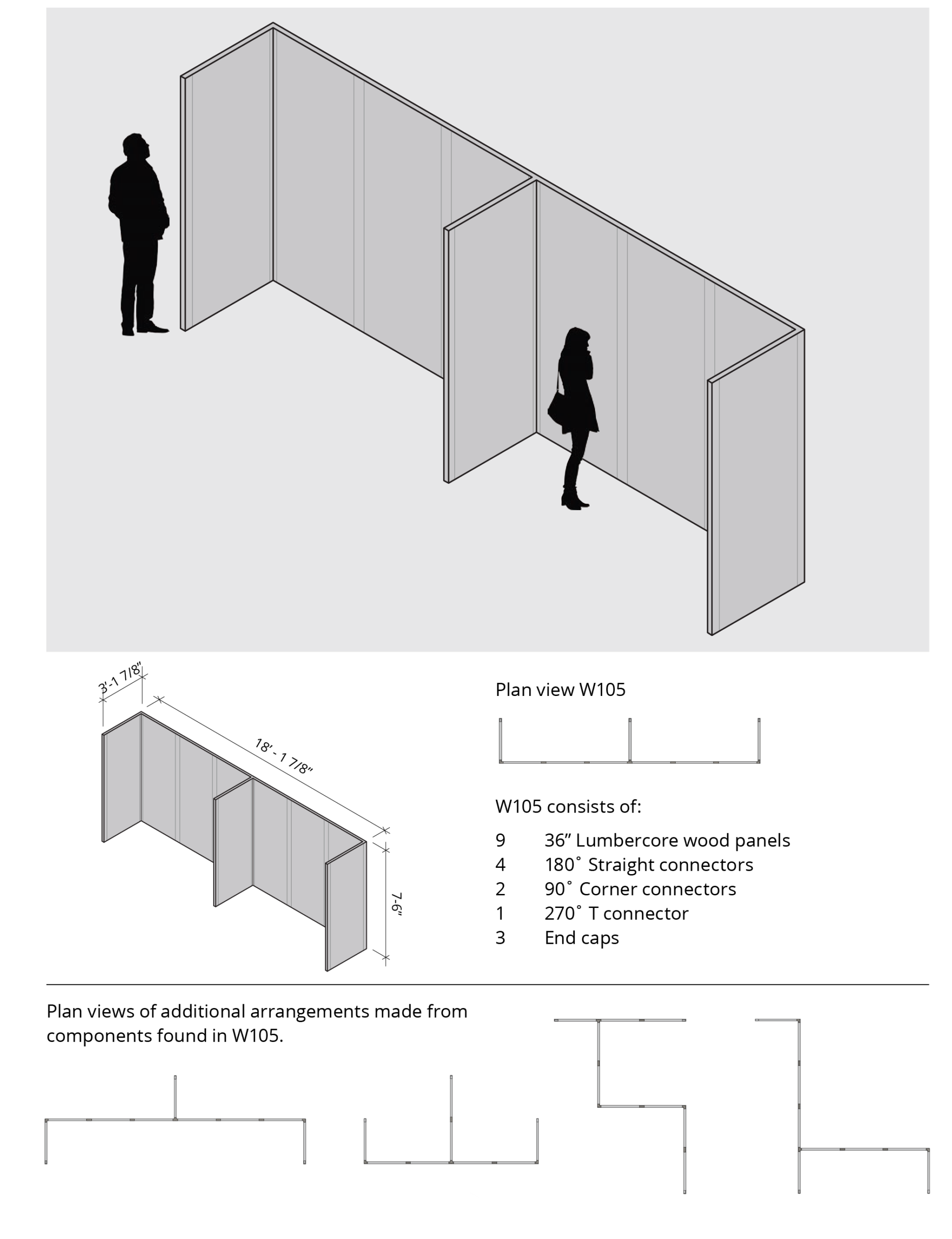
A variation on the U-shape with an internal T-connector, creating additional display surfaces within the enclosed zone.
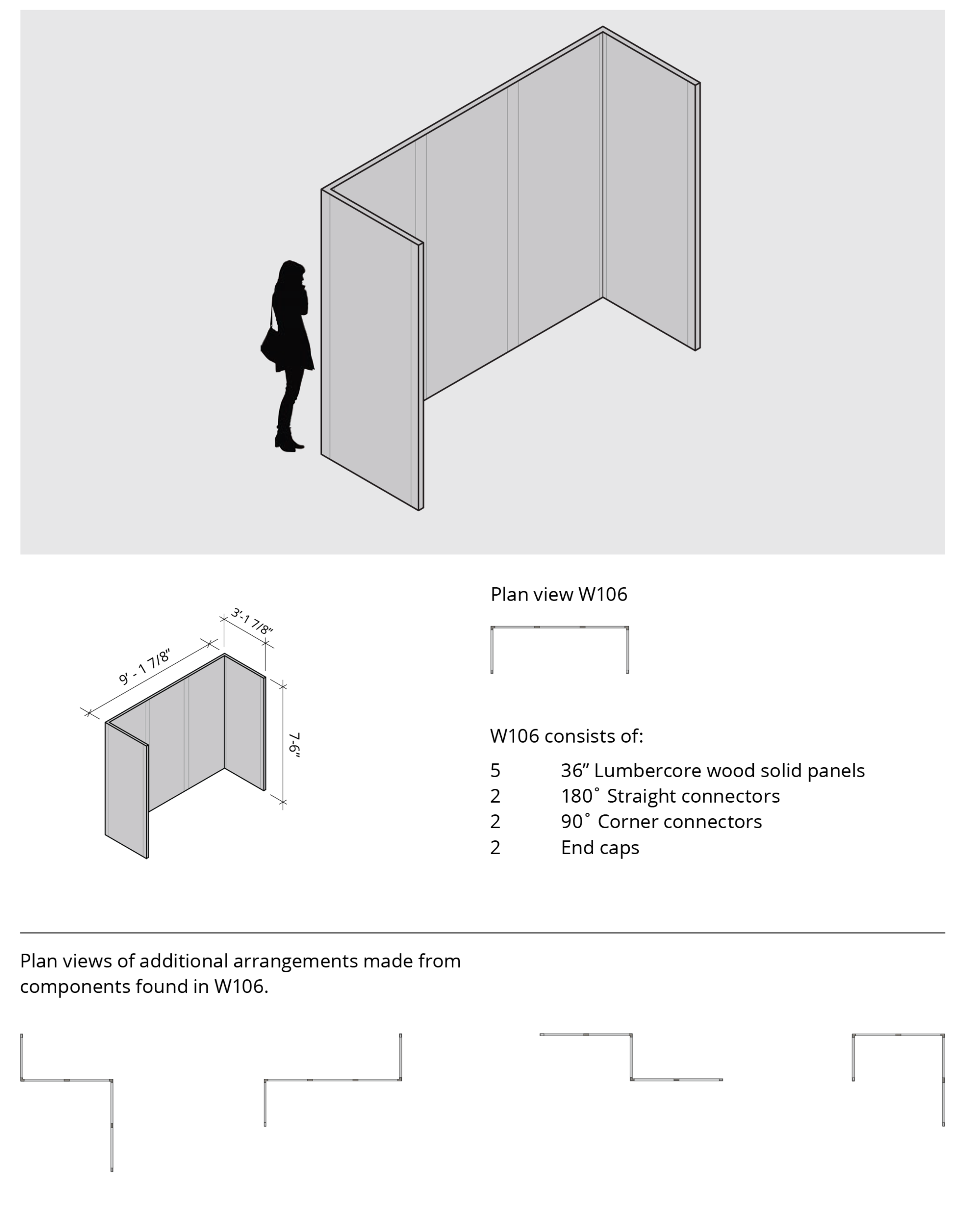
A compact right-angle wall unit using five panels. A clean, simple configuration for alcove or corner display.
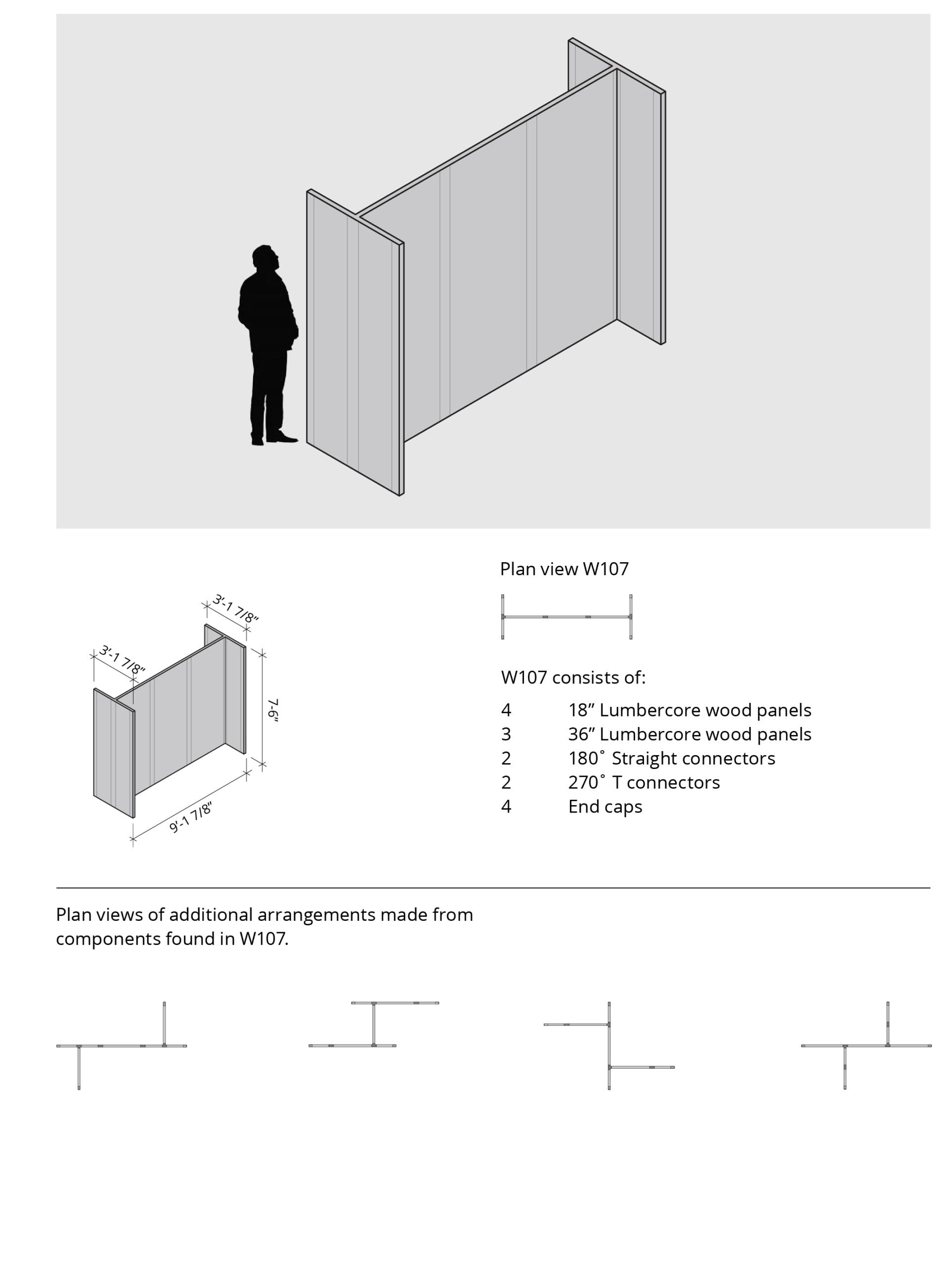
A double T-shaped configuration using both 18-inch and 36-inch panels, creating a cross-shaped freestanding divider with display surfaces on all sides.
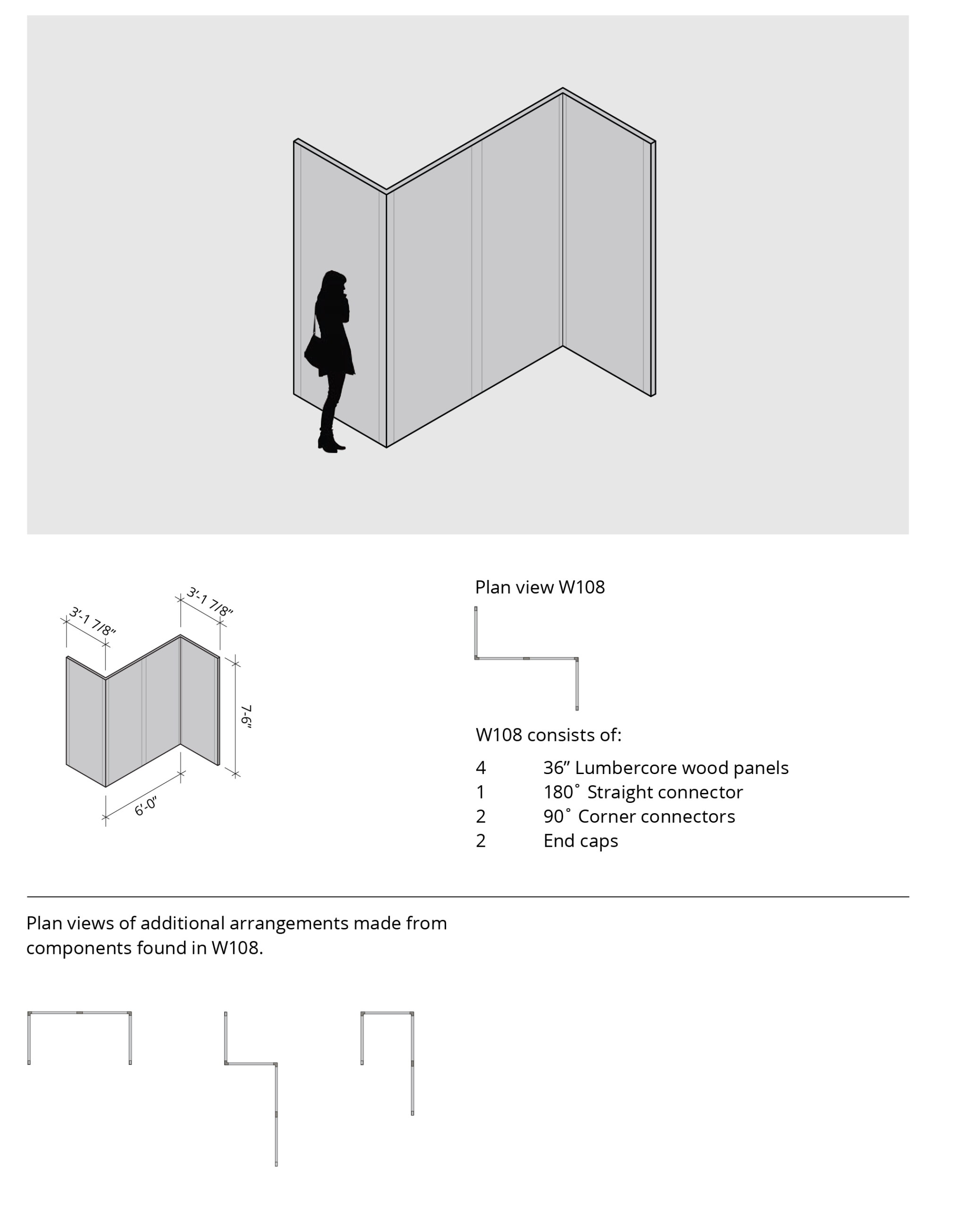
A right-angle configuration using four panels. A minimal wall unit suited to defined display niches or smaller gallery spaces.
The Logic system’s real versatility shows up in combinations: cases integrated directly into wall runs, creating a single cohesive installation where enclosed display areas transition seamlessly into open wall-mounted display. Six standard combinations are shown below, and every one of them can be extended or modified to suit your space.

A wall run with a single 36 x 36 case integrated at one end. A clean, efficient starting configuration for smaller institutions.
A wall run with a case at one end and a perpendicular panel return. Creates a defined display zone that reads as a complete installation.
A wall run with a large 36 x 72 case at the end. Available with sliding glass panels for easy access in active exhibition environments.
Two cases connected by a shared wall panel. Suitable for exhibitions that separate related objects into distinct but adjacent display spaces.
Two large C4-type cases connected, creating a substantial double installation with maximum glass visibility on all sides.
A complex configuration combining two cases, multiple wall panels, and T-connectors. The most expansive standard combination, suited to major gallery installations.