

Cases designed for long-term installation in gallery environments. Built to remain stable, secure, and visually consistent over years of continuous use, with materials and hardware specified for permanence.
Cases configured for collections that change regularly. Designed for practical interior access, adjustable shelving, and lighting that can be repositioned without disrupting the case structure.
Low-profile cases built around a single significant object or a small curated grouping. Used for featured pieces, entry installations, and moments in a gallery where one object deserves the full frame.
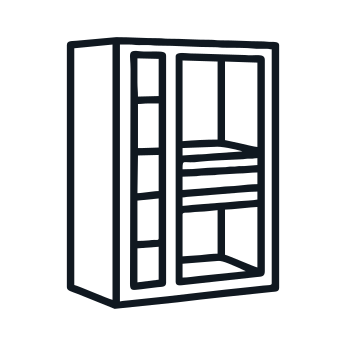
Cases designed for long-term installation in gallery environments. Built to remain stable, secure, and visually consistent over years of continuous use, with materials and hardware specified for permanence.
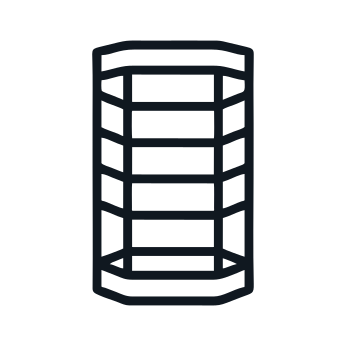
Cases configured for collections that change regularly. Designed for practical interior access, adjustable shelving, and lighting that can be repositioned without disrupting the case structure.

Low-profile cases built around a single significant object or a small curated grouping. Used for featured pieces, entry installations, and moments in a gallery where one object deserves the full frame.

Shallow-profile cases that integrate with gallery walls or fit within architectural recesses. Clean sight lines, minimal visual noise, and a presence that supports the architecture rather than competing with it.

Cases designed as part of a larger exhibit environment—coordinated finishes, shared proportions, and configurations that create visual coherence across an entire gallery or wing.
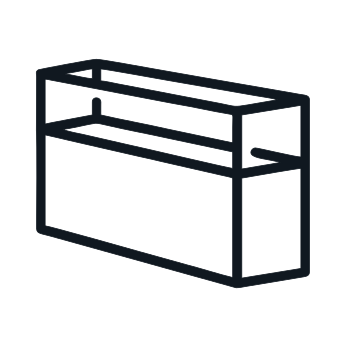
For objects that benefit from close inspection at a comfortable height, tabletop cases place the collection directly at visitor eye level. Used for study collections, interactive exhibits, and detailed objects that reward careful viewing.

Objects on the road face additional risks. Handling, transport, and changing environments demand cases built for mobility without compromising presentation.

Our standard display cases feature 6 mm tempered safety glass, with optional low-iron, laminated, and UV-filtering glass upgrades available for enhanced clarity, security, and conservation.

Built from aluminum, steel, glass, and premium engineered wood materials, our display cases are designed for long-term durability and performance. Conservation-focused material upgrades are available for museum and archival applications.

Environmental isolation requires precision seals. We use museum-grade gasketing materials that maintain their integrity for decades. Cases can be sealed for passive preservation or prepared for active microclimate control systems.

Quality locking hardware comes standard, with upgraded key-control and high-security lock options available. Multi-point locking systems can be incorporated for larger cases, while maintaining a clean, unobtrusive appearance.
